Pages

Sunday, July 2, 2017

ABP 2017: Week 10

the former Lenin palace in the ghost city of Novo-Raychichinsk © Ramona Fitz
After weeks in the field, our data collection on the habitat use of the five co-occuring bunting species has come to an end. Isabelle and Tim now moved on to the Khiganski nature reserve, while Alex travelled home. But before, we went on an excursion to Raychichinsk. This area in the east of the Amur region is much more forested, and huge open coal pits have created an interesting but artificial landscape. Our target were the forest bogs as well as the wetlands in the flooded former pits. Despite the ongoing thunderstorms, we enjoyed some interesting birds. Band-bellied Crakes Zapornia paykulli were calling in forest clearings, and numerous Gray´s Grasshopper Warbler Locustella fasciolata were singing all around. Olive-backed Pipits Anthus hodgsoni were breeding in the pits, and Black Woodpeckers Dryocopos martius as well as Eastern Great Tits Parus minor in nearby pine forests. In the evening, Grey Nightjars Caprimulgus jotaka were displaying above our campfire.
On our way back to the Park we found several colonies of House Martins. Like most of the birds which I have seen during the past years in the Amur region, they showed features of both Northern House Martin Delichon urbicum as well as of Asian House Martin D. dasypus. But this time we were lucky to trap some individuals, giving us the chance to take good pictures and to collect samples for future DNA analysis.
Back at the Park, we spent the last days with the children in the summer camp. We were surprised how many were motivated to get up very early to join us for bird ringing in the morning. All participants left on Wednesday, but already next day, Sissel from Sweden and Mikkel from Denmark arrived. Both are experts in bird migration, and they continue now the study on the migration route of Brown Shrikes Lanius cristatus. Meanwhile, Ramona and I worked further on the Chestnut-eared Bunting Emberiza fucata. This species is a long-distance migrant as well, and our aim is to compare the migratory behaviour with its endangered cousin, the Yellow-breasted Bunting E. aureola.

Nach vielen Wochen im Sumpf ist die Datenaufnahme für unsere Studie zur Habitatnutzung der fünf nebeneinander vorkommenden Ammer-Arten nun abgeschlossen. Isabelle und Tim sind weiter ins Khinganski Schutzgebiet gereist, und für Alex ging es zurück nach Hause. Doch zuvor fuhren wir gemeinsam gen Osten, nach Raychichinsk. In diesem Gebiet gibt es noch viel mehr Wald, und riesige Braunkohle-Tagebaue haben eine interessante künstliche Landschaft entstehen lassen. Unser Ziel waren die Waldmoore und die Feuchtgebiete in den ehemaligen Gruben. Trotz ständiger Gewitter gelangen uns einige interessante Beobachtungen. Einige Mandarinsumpfhühner riefen in den Lichtungen, überall sangen Riesenschwirle. In den Tagebauen brüten Waldpieper und in den Kiefernwäldern an den Grubenhängen beobachteten wir Schwarzspechte und Östliche Kohlmeisen. Am Abend balzten die Dschungelnachtschwalben über unserem Lagerfeuer.
Auf unserem Weg zurück in den Park entdeckten wir mehrere Mehlschwalben-Kolonien. Wie die meisten Vögel, die ich in den letzten Jahren hier im Amurgebiet sehen konnte, zeigten diese Vögel sowohl Merkmale der eurasischen Mehlschwalbe als auch der asiatischen Kaschmirschwalbe. Aber diesmal hatten wir das Glück, einige Individuen fangen zu können – anhand der Bilder und der DNA-Proben sollte eine Lösung des Rätsels nun möglich sein.
Zurück im Park verbrachten wir die letzten Tage mit den Kindern im Sommercamp. Wir waren beeindruckt, wie viele sich am sehr zeitigen Morgen aus den Betten schälten, um uns beim Beringen über die Schulter zu schauen. Am Mittwoch reisten alle Camp-Teilnehmer ab, doch schon am nächsten Tag kamen Sissel aus Schweden und Mikkel aus Dänemark an. Beide sind Vogelzug-ExpertInnen, und sie führen nun die Arbeit zum Zug des Braunwürgers fort. Währenddessen beschäftigen Ramona und ich uns mit der Bandammer. Auch diese Art ist ein Langstreckenzieher, und unser Ziel ist es, ihren Zugweg mit dem der bedrohten Weidenammer zu vergleichen.


//Wieland

former coal pits can create interesting habitats © Ramona Fitz
this area flourished during Soviet times © Alex Thomas
later successional stages are covered by pine forests © Alex Thomas
our camp in the woods © Alex Thomas
wet meadows surrounded by birch forests are home to Band-bellied Crakes © Alex Thomas
White-winged Tern Chlidonias leucopterus near Tambovka © Alex Thomas
one of the House Martins in question © Alex Thomas
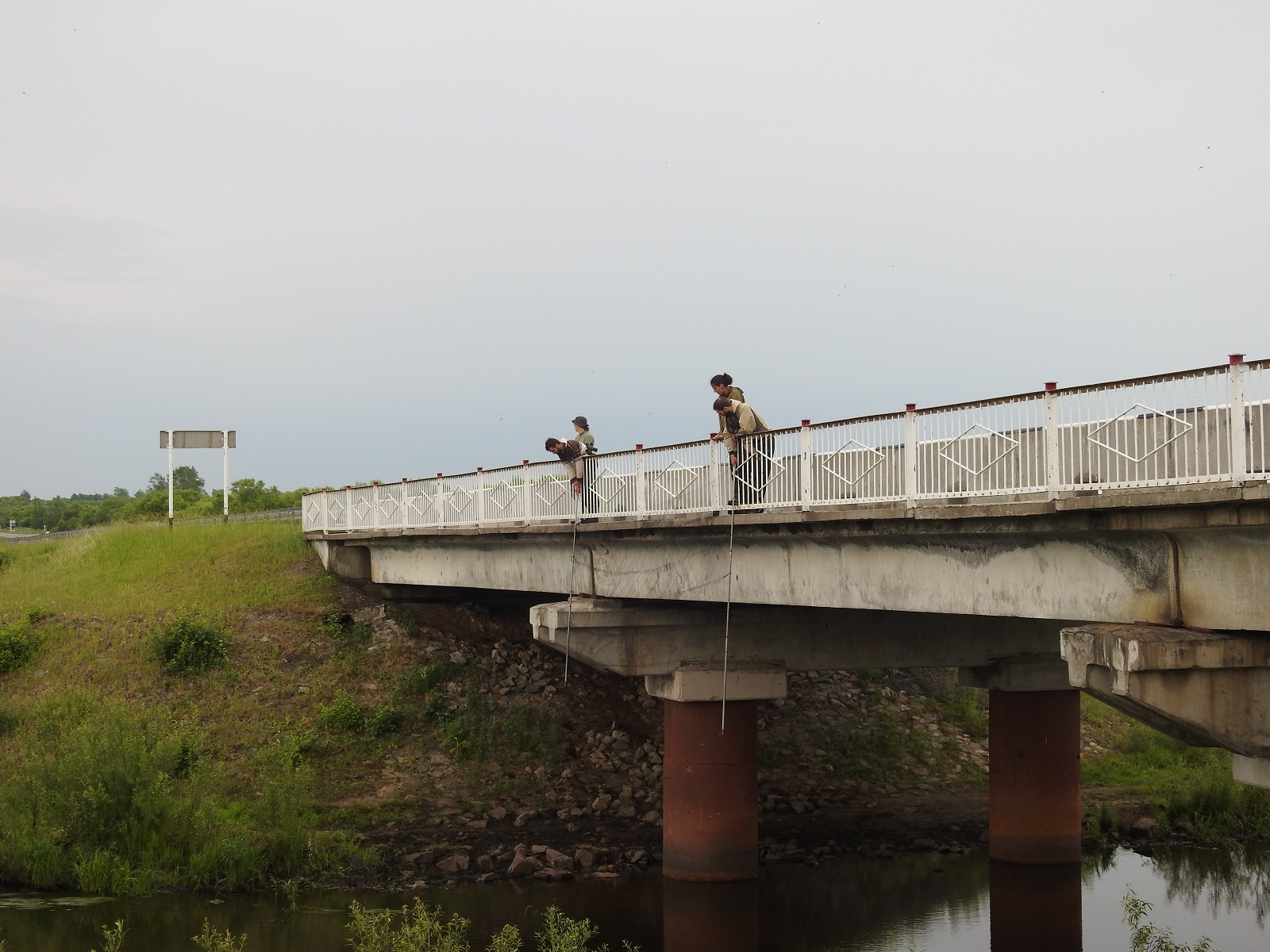
fishing for martins © Tim Korschefsky
first bird in the net :) © Ramona Fitz
any comments on the ID are very welcome! © Alex Thomas
Isa and Tim showing frogs and insects to the kids © Wieland Heim
bird ringing in the summer camp © Ramona Fitz
Valeria releasing a Rubythroat © Wieland Heim
last dinner with our Russian and American friends © Wieland Heim
Chestnut-eared Bunting, male © Wieland Heim
a lifer for Mikkel and Sissel © Wieland Heim
Chestnut-eared Bunting, female © Wieland Heim
flowering Epilobium angustifolium  © Ramona Fitz
one of the numerous butterflies: Aporia crataegi © Tim Korschefsky

26.06.-02.07.2017, total traps: 51 birds out of 12 species
Bandammer Chestnut-eared Bunting Ошейниковая овсянка Emberiza fucata 13
Rubinkehlchen Siberian Rubythroat Соловей-красношейка Luscinia calliope 7
Rauchschwalbe Barn Swallow Деревенская ласточка Hirundo rustica 7
Braunwürger Brown Shrike Сибирский жулан Lanius cristatus 5
Goldschnäpper Yellow-rumped Flycatcher Желтоспинная мухоловка Ficedula zanthopygia 4
Mehl-/Kaschmirschwalbe Northern/Asian House Martin Воронок Delichon spec. 4
Maskenammer Black-faced Bunting Седоголовая овсянка Emberiza spodocephala 3
Meisengimpel Long-tailed Rosefinch Урагус Uragus sibiricus 3
Brauenrohrsänger Black-browed Reed Warbler Чернобровая камышевка Acrocephalus bistrigiceps 2
Dickschnabel-Rohrsänger Thick-billed Warbler Толстоклювая камышевка Acrocephalus aedon 1
Mandschurenammmer Ochre-rumped Bunting Рыжешейная овсянка Emberiza yessoensis 1
Dunkellaubsänger Dusky Warbler Бурая пеночка Phylloscopus fuscatus 1

Wednesday, June 28, 2017

ABP 2017: Week 9

Crane festival or "open wetlands day" at Muraviovka Park © Alex Thomas
Another busy week has passed quickly. Ramona finally arrived on Monday – she will continue to study the effects of fire on wetland vegetation. Furthermore, the big summer camp has started at Muraviovka Park. Seven teachers from the United States of America came together with two Russian teachers and 22 children from Khabarovsk to learn about the environment and to enhance their language skills. We were also happy to participate and worked with the kids at the ringing station. Not too many birds were trapped, but rather unexpected was a recapture of a male Taiga Flycatcher Ficedula albicilla ringed here in May and a female Elegant Bunting Emberiza elegans – both species do not breed here. Furthermore, we ringed a brood of four juvenile Eurasian Sparrowhawks Accipiter nisus with the camp participants. We were also able to show them White-naped Cranes Antigone vipio and Oriental Storks Ciconia boyciana. On Sunday, the “Open wetlands day” was celebrated at the Park, and over hundred visitors from Blagoveshchensk and the surrounding villages came to learn about the value of the swamps. A very nice week with very nice people.
The main task during the past week was the continuation of our studies on the migration routes of Siberian Rubythroats Calliope calliope and Barn Swallows Hirundo rustica. Temperatures of up to 38°C in the shadow and heavy rainfalls made our work not easy. However, we trapped many of the local breeders of both species, and we will continue to do so in the next week.
Furthermore, some interesting birds were seen during the past days. A Great White Egret Casmerodius albus was seen in the south, and Isabelle found two warning Eastern Yellow Wagtails Motacilla tschutschensis macronyx in the centre of the Park – the first record during breeding season since many years.

Eine weitere arbeitsreiche Woche ist vorbei. Endlich ist auch Ramona hier angekommen – sie wird ihre Untersuchungen zum Einfluss des Feuers auf die Vegetation fortführen. Außerdem hat die große Sommerschule im Muraviovka Park begonnen. Sieben LehrerInnen aus des USA kamen zusammen mit zwei russischen Lehrerinnen und 22 Kindern aus Khabarovsk um mehr über die Umwelt zu lernen und gleichzeitig ihre Sprachkenntnisse zu vertiefen. Wir haben uns gern an diesem gelungenen Camp beteiligt und haben mit den Kindern an der Beringungsstation gearbeitet. Nicht all zu viele Vögel gingen ins Netz, aber relativ unerwartet waren ein Wiederfang eines männlichen Taigaschnäppers (beringt im Mai) und eine weibliche Gelbkehlammer – beide Arten sind hier zur Brutzeit normalerweise nicht anzutreffen. Außerdem beringten wir vier Sperber-Nestlinge mit den Teilnehmern. Glücklicherweise konnten wir den Gästen auch einige Weißnackenkraniche und Schwarzschnabelstörche zeigen. Höhepunkt der Woche war jedoch der „Tag des offenen Feuchtgebietes“ am Sonntag. Über hundert Besucher kamen aus Blagoweschtschensk und den umliegenden Dörfern um sich über die Bedeutung der Sümpfe für Natur und Mensch zu informieren. Insgesamt eine sehr schöne Woche mit wirklich netten Leuten.
Die Hauptaufgabe in der letzten Woche bestand jedoch im Fang von Rubinkehlchen und Rauchschwalben, um unsere Studien zur Erforschung ihrer Zugwege fortzuführen. Trotz enormer Hitze (bis zu 38°C im Schatten) und starken Regenfällen konnten viele der lokalen Brutvögel beloggert werden, doch es wird nächste Woche noch einiges zu tun geben.
Außerdem gelangen ein paar interessante Beobachtungen in den letzten Tagen – so wurde ein Silberreiher im Süden des Parks gesehen, und Isabelle entdeckte zwei warnende Östliche Schaftstelzen im Herzen des Schutzgebietes – der erste Brutzeitnachweis seit vielen Jahren.

//Wieland

the visitors learned about the importance of this area for globally threatened species like Baer´s Pochard © Alex Thomas
Alex showing a Common Cuckoo to the kids © Wieland Heim

releasing birds after ringing makes everyone happy © Wieland Heim
Tim made it to the Parks photo exhibition © Wieland Heim
very proud to hold a raptor in his hand © Ramona Fitz
Sparrowhawk ringing with the camp participants © Ramona Fitz
the Park is getting colourful: Clematis hexapetala © Ramona Fitz
flowering Sedum aizoon © Ramona Fitz
ready for Rubythroat ringing © Wieland Heim
Uncommon visitor: Great White Egret © Tim Korschefsky
warning Eastern Yellow Wagtail - a rare sight at the Park © Isabelle Berner

19.-25.06.2017, total traps: 98 birds out of 21 species
Maskenammer Black-faced Bunting Седоголовая овсянка Emberiza spodocephala 18
Rubinkehlchen Siberian Rubythroat Соловей-красношейка Luscinia calliope 14
Rauchschwalbe Barn Swallow Деревенская ласточка Hirundo rustica 13
Meisengimpel Long-tailed Rosefinch Урагус Uragus sibiricus 7
Streifenschwirl Pallas´s Grasshopper Warbler Певчий сверчок Locustella certhiola 7
Goldschnäpper Yellow-rumped Flycatcher Желтоспинная мухоловка Ficedula zanthopygia 6
Dickschnabel-Rohrsänger Thick-billed Warbler Толстоклювая камышевка Acrocephalus aedon 5
Brauenrohrsänger Black-browed Reed Warbler Чернобровая камышевка Acrocephalus bistrigiceps 5
Sperber Eurasian Sparrowhawk Перепелятник Accipiter nisus 4
Mandschurenammmer Ochre-rumped Bunting Рыжешейная овсянка Emberiza yessoensis 3
Feldsperling Eurasian Tree Sparrow Полевой воробей Passer montanus 2
Sibirisches Schwarzkehlchen Siberian Stonechat Черноголовый чекан Saxicola maura 2
Dunkellaubsänger Dusky Warbler Бурая пеночка Phylloscopus fuscatus 2
Strichelschwirl Lanceolated Warbler Пятнистый сверчок Locustella lanceolata 2
Sumpfmeise Marsh Tit Черноголовая гаичка Poecile palustris 2
Chinarohrsänger Oriental Reed Warbler Восточная дроздовидная камышевка Acrocephalus orientalis 1
Taigaschnäpper Taiga Flycatcher Восточная малая мухоловка Ficedula albicilla 1
Wendehals Eurasian Wryneck Вертишейка Jynx torquilla 1
Gelbkehlammer Elegant Bunting Желтогорлая овсянка Emberiza elegans 1
Kuckuck Common Cuckoo Обыкновенная кукушка Cuculus canorus 1
Lasurmeise Azure Tit Князек Cyanistes cyanus 1

Sunday, June 18, 2017

ABP 2017: Week 8

Lanceolated Warbler Locustella lanceolata, singing © Arend Heim
The last week could not have started better: on Monday morning, at 3 am, I re-trapped another Yellow-breasted Bunting Emberiza aureola. This bird was marked on the 14th of June 2016, so almost exactly one year earlier. As a by-catch, a Thick-billed Warbler Acrocephalus aedon was caught in this net. Rather surprisingly, this bird was also already ringed – together with the very same Yellow-breasted Bunting in 2016! What a coincidence.
We did not ring many more birds during the following days, except for some juvenile Common Magpies Pica pica and Daurian Jackdaws Corvus dauuricus – the latter being the first ever ringed within the project.
Most of the week we were occupied with our work on the buntings. We found the first five nests and placed temperature loggers inside to survey their breeding success without having to check (and disturb) the broods again.
On Wednesday we were invited to a school in Sadovoye, were we gave a presentation about our work at Muraviovka Park and the importance of the wetlands for threatened birds. After an excellent lunch with our friends in the village, we followed the Gilchin river northwards. We found an area of nice wet meadows where we camped for one night. Rails were searched in the night, while point counts were conducted in the morning. At least four pairs of White-naped Cranes Antigone (Grus) vipio were observed, two Swinhoe´s Rails Coturnicops exquisitus were calling and more than 10 pairs of Common Coot Fulica atra were nesting together with White-winged Terns Chlidonias leucopterus and Whiskered Terns C. hybridus on the reservoir.
Unfortunately, Arend and Tom had to leave on Saturday. Both have contributed a lot to our knowledge about the threatened avifauna of the Amur wetlands. We spent the last night together with our Russian friends in Blago, after we visited the Brown Hawk Owl Ninox scutulata breeding site in a city park. And already next week, the Park´s big summer camp with the American teachers will start.

Einen besseren Start in die neue Woche hätte ich mir nicht wünschen können: schon um 3 Uhr morgens hing die erste beloggerte Weidenammer im Netz. Ich hatte dieses Individuum am 14. Juni 2016 beringt, also ziemlich genau vor einem Jahr. Als Beifang hing ein Dickschnabel-Rohrsänger im Netz. Erstaunlicherweise trug auch dieser bereits einen Ring, und es stellte sich heraus, dass ich genau diesen Vogel auch damals vor einem Jahr als Beifang dieser Weidenammer gefangen hatte! Was für ein Zufall.
In den folgenden Tagen haben wir kaum weitere Vögel beringt, nur ein paar junge Elstern und Elsterdohlen – immerhin die ersten im Rahmen des Projekts.
Die meiste Zeit waren wir mit den Ammern beschäftigt. Wir haben nun die ersten fünf Nester gefunden und Temperaturlogger in ihnen platziert, um den Bruterfolg überwachen zu können, ohne die Bruten nochmals kontrollieren (und stören) zu müssen.
Am Mittwoch folgten wir einer Einladung an die Schule in Sadovoye, wo ich einen Vortrag über unsere Arbeit im Muraviovka Park und die Bedeutung der Feuchtgebiete für bedrohte Vogelarten hielt. Nach einem köstlichen Mittagessen bei unseren Freunden im Dorf folgten wir dem Fluss Gilchin weiter nach Norden. Wir fanden ein Gebiet mit vielversprechenden Feuchtwiesen, wo wir für eine Nacht kampierten. Nachts wurde dann nach Rallen gesucht, und am Morgen Punkt-Stop-Zählungen durchgeführt. Mindestens vier Paare des Weißnackenkranichs konnten wir entdecken, dazu zwei rufenden Mandschurensumpfhühner und mehr als 10 Paare Bläßhuhn in der Nähe einer Kolonie von Weißflügel- und Weißbart-Seeschwalben.
Leider mussten Arend und Tom am Samstag abreisen. Beide haben erneut viel zu unserem Verständnis der bedrohten Vogelwelt in den Feuchtgebieten am Amur beigetragen. Die letzte Nacht verbrachten wir traditionsgemäß mit unseren russischen Freunden in Blago, nachdem wir zuvor den bekannten Falkenkauz-Brutplatz in einem Stadtpark besuchten.
Und nächste Woche beginnt dann schon das große Sommercamp im Muraviovka Park, mit Lehrern aus den USA.

//Wieland
many children came to our presentation at Sadovoye school © Arend Heim
the day´s theme was environment & native american culture © Arend Heim
we played the ABP card game... © Arend Heim
...and of course the bird memory game © Arend Heim
wet meadows at Gilchin river © Arend Heim
our camp site © Wieland Heim
Common Coot nest © Wieland Heim
Pallas´s Grasshopper Warbler Locustella certhiola is one of the most common birds in wet meadows © Arend Heim
Siberian Stonechat Saxicola (maura) stejnegeri chasing a moth © Arend Heim
Far Eastern Curlews Numenius madagascariensis on a field at Muraviovka Park © Tim Korschefsky
barely visible: a nest of the Yellow-breasted Bunting © Wieland Heim
bird ringing with the summer camp cook´s (chicks are not for eating) © Arend Heim
Daurian Jackdaws like to breed in Magpie nests high up in poplar trees © Arend Heim
Arend with a Mapgie chick © Wieland Heim
poachers NOT welcome © Arend Heim
we are wheel change specialists now © Wieland Heim
Brown Hawk Owl in a city park © Arend Heim
wagging dance floor and Russian pop music - that´s a night out in Blago © Wieland Heim

12.-18.06.2017, total traps: 12 birds out of 6 species
Elster Common Magpie Сорока Pica pica 4
Elsterdohle Daurian Jackdaw Даурская галка Corvus dauuricus 4
Dickschnabel-Rohrsänger Thick-billed Warbler Толстоклювая камышевка Acrocephalus aedon 1
Weidenammer Yellow-breasted Bunting Дубровник Emberiza aureola 1
Zwergsumpfhuhn Baillon´s Crake Погоныш-крошка Porzana pusilla 1
Feldsperling Eurasian Tree Sparrow Полевой воробей Passer montanus 1